Clusters: the tracks you always play together
Put two to four tracks in a cluster and they move through the set as one block, in your order. Need one for the opening or the landing? Ask, and it builds one.
Set preparation for techno and house DJs
A set is a story and your tracks are the emotional turns. Doors of Harmony knows the theory and the science. You bring the feeling.
Track 08 → 09 · A minor 8A → A major 11B · 128 → 129
Picardy Turn
A minor turns into A major on the same root. The room has lived in minor for twenty minutes; this is where it opens. Energy 5.6 to 6.6. Spend it once.
Land it on the drop, not in the breakdown, so the shift to major arrives with the kick.
Suggested · medium mix
Start First Light at bar 49.
Both phrase grids line up at bar 49. The intro of First Light runs under the outro of Night Engine for 16 bars. Swap the bass on bar 65, where the first drop of First Light lands.
Both tracks hold a straight 4/4 at 51 and 52% swing, so the groove carries the mix while the harmony moves from minor to its parallel major.
Build me a warm, dark opening hour from my playlist. Nothing above 127 for the first 20 minutes.
A 60-minute opening in three chapters. Minor keys only, 6A to 8A, energy between 3 and 5. The first major colour waits until minute 52.
Glass Room into Warm Static is a Relative Shift: 8A to 8B. Same seven notes, the centre moves to the relative major, the energy holds. Want it darker? I can stay in 8A and swap Warm Static for Night Engine.
Current phrase
Strip the kick in 2 bars
The breakdown lands on the next phrase boundary. Let it run for 8 bars, then bring Halo Fade in under it.
Next 3 moves
Interface preview. Doors of Harmony is in private development. Imports rekordbox, Traktor and Serato libraries. Native on macOS.
Explanations are written by Anthropic's Claude from the engine's measured analysis. Imports rekordbox, Traktor and Serato libraries. Native on macOS.
Why we built it
The DJ and the floor write the night together. Nobody plans that at home.
Everyone knows a legendary set. Everyone knows the moment a night dies. Most of that is decided before you reach the booth.
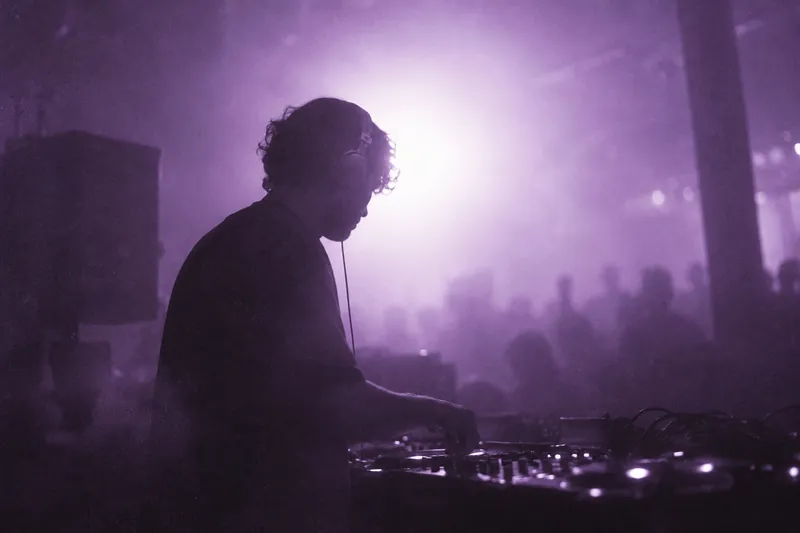
You already have your tracks for this month. The work is turning them into a night: learning which ones belong together, building the order, tearing it up and building it again.
It is the most creative part of DJing, and it eats whole evenings. Move one track and the two mixes around it fall apart. Every change means checking everything after it. By hand. Again.
Doors of Harmony takes the half that is maths. The half that is taste stays with you.
Stop guessing, start playing.
Not a key detector. Not a compatibility matrix. A reasoning engine that understands your entire library, predicts how every choice will feel to the room, and speaks to you like a world-class mentor standing beside you.
Chess engines did not replace chess players. They made them stronger.
Doors of Harmony finds the combinations in your own tracks and tells you what each one does to a floor. You choose.
Music has rules and the floor obeys them. Minor into its own major is a sunrise. Two keys a fifth apart mix like water. Doors of Harmony knows the rules well enough to break them on purpose.
What it does
Doors of Harmony does three things. It finds the story of the night in a fraction of the time. It finds the right track for every place in the set: the opener, the gap, the peak. And it shows you combinations you would never have tried, so your mixing keeps growing.
Put two to four tracks in a cluster and they move through the set as one block, in your order. Need one for the opening or the landing? Ask, and it builds one.
Refuse a track and the set closes around the gap. Lock one and it stays. Say a stretch is too hard and the next picks come in softer.
There is no single best set. There is yours. Every slot has alternatives, each one checked against what comes before and after.
Every mix comes with its reason: the harmonic move, the lift, the groove, and what that does to a floor. Ask why track seven is there and the answer is about your tracks.
The last fifteen minutes are what people take home. Doors of Harmony brings the close back to the key you opened in.
Save the pairings you trust and rate them. Doors of Harmony learns your taste from them and finds new pairs with the same move. Your own book, on top of ours.
How it works
A two-hour warehouse slot, two days out.
Import this month's playlist from rekordbox, Traktor or Serato. Every track is read for key, chords, energy, groove and phrasing.
The opener, the track that has to carry the peak, or simply the shape of the night. You get a set, and a few alternatives to choose from.
Refuse a track with one click, no questions asked. Lock the ones you love and keep your clusters together. Everything around the change reorganises.
See the alternatives for that place in the set, each one checked against its neighbours and explained: the harmonic move, the lift, what it does to the floor.
Take the set into the booth. On Saturday you still read the room and change the order whenever you feel it. You just know what every change will do.
The Combination Book
Some of these moves have had a name for centuries. Others we named ourselves. Each one is a step between harmonic scales, with its own energy, pacing and feeling. Open the book when you want to try something new, and it shows you which of your own tracks can play each move.
Picardy third · also called The Sunrise Turn
DarkTriumphantsudden
Minor resolves into its own major, root held. Energy 0 to +2. The room expects more night and gets a sunrise. Spend it once.
In your playlist Night Engine → First Light
More
Every track placed by harmonic scale, with your set drawn across them as a path. See where the night stays home and where it travels.
Tap a word like syncopation or Phrygian and it explains itself in three lines: as theory, as feel or in plain words. You learn on your own music.
Track 05 → 06 Glass Room into Warm Static: the groove turns and the key slips into colour.
Accents placed between the main beats. In Warm Static 6 of its 7 hits fall on 16th-note off-beats, swing 54%. The kick keeps the grid; everything else pulls against it.
on the beat between the beats · 6 of 7 hits between the kicks
the colour note · E minor with a lowered second: F instead of F♯
Drop in the week's promos. Each one arrives analysed, with the chapter it belongs in and the track it follows best.
Short, medium and long options for every pair, each starting on a phrase: the bar to come in on and the bar for the bass swap.
Save named styles. They learn from what you keep, lock and refuse, never from tracks you scrolled past.
Type "the rolling dark one that breathes" and get it.
An engine that reads key, chords, energy, groove and phrasing. The rules of harmony and the 34 moves. And Claude by Anthropic, which turns the numbers into reasons.
Finished sets go back to rekordbox, Traktor or Serato as ready-to-play playlists.
Doors of Harmony prepares. It does not mix, does not touch a fader and does not decide what the room needs at 3 am. You walk into the booth with your evenings back.
Who it is for
We started with techno and house, where mixes run long enough for the floor to hear the harmony move. Doors of Harmony works with the tracks you are playing now, not your whole collection.
Coming next
Set preparation launches first. On the same engine:
Products
The same intelligence inside Ableton Live: Ableton Copilot Coming. Doors of Harmony for DJs opens first.
FAQ
No. It helps you choose and order tracks and tells you what every mix does. The faders, the EQ and the timing are yours.
Most DJs do not need their whole collection curated. They have their favourites for this month. Doors of Harmony turns those into the next set.
It imports playlists from rekordbox (XML export), Traktor (NML collection) and Serato. Export of finished sets back into your DJ software is in development.
No. It gives you options, not one answer, and learns from what you keep and refuse.
Doors of Harmony is in private development. Early access opens first to a small group of techno and house DJs. Founding members get a founding rate.
Early access
A small first group of techno and house DJs will shape what Doors of Harmony becomes. Tell us what you play and where.